
Knees Cave In, Part 2: The Overactive and Underactive Muscles You Actually Need to Know
Sep 16, 2026In Part 1, we learned that knees caving inward isn't simply a "bad squat."
It's a movement compensation.
The body has chosen a different movement strategy because it can no longer maintain ideal alignment.
Now it's time to answer the question every NASM student eventually asks:
Which muscles are responsible?
Fortunately, you don't have to memorize a long list of muscles to understand this compensation.
Once you recognize the movement pattern, the muscle imbalance becomes much easier to figure out.
Missed Part 1?
Before continuing, read:
Why the Knees Cave In During the Overhead Squat Assessment (And What It Means)
Understanding why the knees move inward makes the muscle relationships much easier to remember.
Watch the Video First
This article expands on the concepts taught in the accompanying video. Watching the movement in real time makes it much easier to recognize the compensation during both the NASM CPT exam and when assessing clients.
▶︎ Watch: Why Do Knees Cave in During a Squat?
Download the Free Muscle Compensation Chart
As you work through this series, keep the CPT Academy Muscle Compensation Chart nearby. It summarizes the primary overactive and underactive muscles for every major movement compensation and serves as a quick study reference.
⬇︎ Download the Free Muscle Compensation Chart
Step 1: Start With the Movement
One of the biggest mistakes students make is trying to memorize every overactive muscle in one list and every underactive muscle in another.
That isn't how you'll recognize the answer on the exam.
Instead, always begin with the movement.
Ask yourself:
What compensation am I seeing?
In this case:
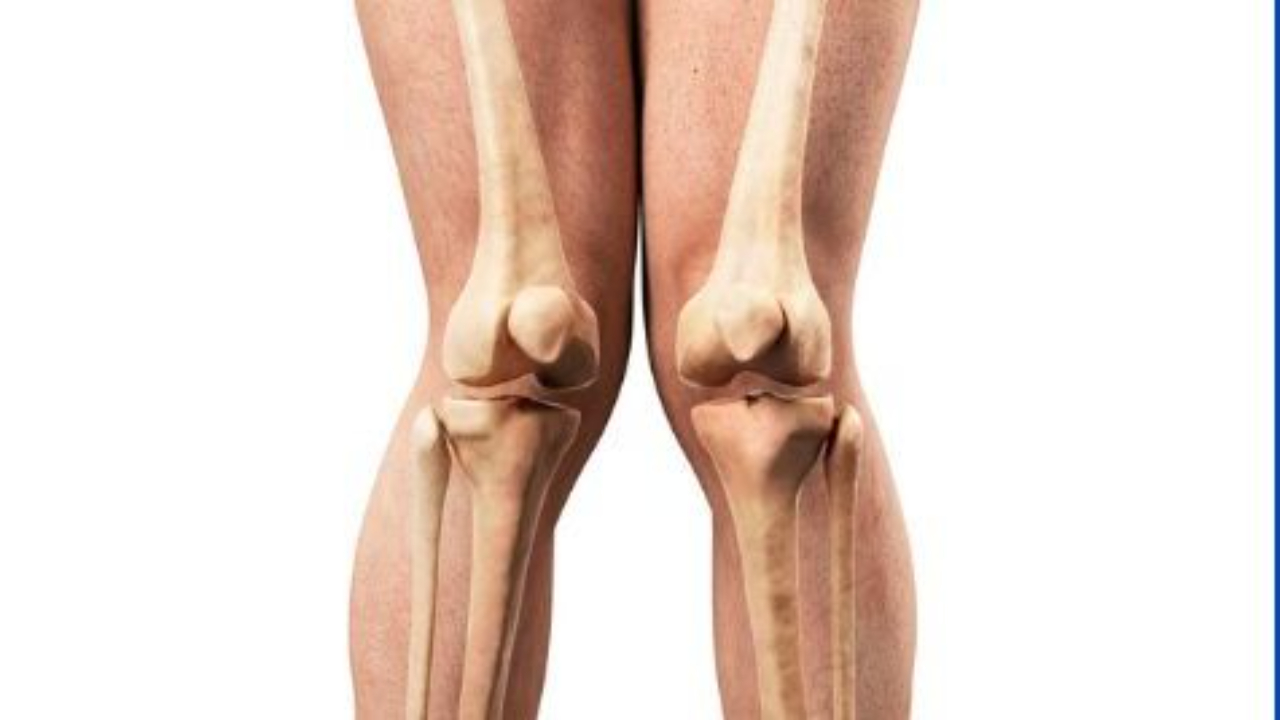
The knees are moving inward.
Once you've identified the movement, the muscle imbalance becomes much easier to understand.
Which Muscles Become Overactive?
When the knees cave inward, NASM identifies several muscles that commonly become overactive.
The primary muscles include:
- Adductor complex
- Tensor fasciae latae (TFL)
- Biceps femoris (short head)
- Vastus lateralis
At first glance, that's a lot to remember.
Instead of memorizing four unrelated muscle names, look for the pattern.
Many of these muscles either pull the femur inward or create conditions that allow the knees to drift toward the midline. They do the exact same thing when we want them to work/contract when they are overactive/chronically stuck in a state of contraction, i.e. hip adductors move the knees toward the center of body (adduct).
Understanding that relationship is much easier than memorizing a table.
NASM Exam Tip
Don't panic when you see anatomical names.
For example:
Adductor complex
Simply think:
Inner thigh muscles.
When you translate the textbook terminology into muscles you already recognize, the exam becomes much less intimidating.
Don't Memorize Muscles. Think Opposites.
Now ask yourself an important question.
If one group of muscles is becoming increasingly dominant...
Which muscles should be losing the battle?
Remember one of the most important concepts in corrective exercise:
When one muscle group remains chronically shortened and overactive, the opposing muscles become lengthened and underactive.
That's exactly what's happening here.
Instead of trying to memorize two unrelated lists, think about which muscles should be resisting the knees from collapsing inward.
Those muscles are the ones most likely to become weak.
Which Muscles Become Underactive?
The primary underactive muscles include:
- Gluteus medius
- Gluteus maximus
These muscles play an important role in controlling hip position and helping keep the knees aligned during movement.
When they can't generate enough force or activate at the right time, the knees become much harder to control throughout the squat.
This is why you'll hear trainers place so much emphasis on strengthening the glutes.
For the NASM exam, remember that they're much more than muscles used for hip extension.
They're also essential for maintaining proper lower-body alignment.
A Simple Way to Remember It
Instead of memorizing six or seven muscle names, picture someone performing a squat.
Their knees begin drifting inward.
Now ask yourself:
What muscles are pulling inward?
The inner thigh muscles (on the front side of the body).
What muscles should be preventing that movement?
The glutes (their partner muscle on the back side of the body).
That simple mental picture is much easier to remember than a corrective exercise chart.
Don't Forget the Bigger Picture
One of the biggest traps students fall into is assuming there's only one muscle responsible for every movement compensation.
That's almost never the case.
Movement is produced by groups of muscles working together.
When one group becomes overactive, another becomes underactive, and the body develops a new movement strategy.
That's why corrective exercise always focuses on restoring balance—not simply strengthening one muscle or stretching another.
Common Mistake
Many students memorize:
- Adductors
- TFL
- Vastus lateralis
- Biceps femoris
- Gluteus medius
- Gluteus maximus
...without understanding how they're connected.
A week later, the entire corrective exercise table starts blending together.
Instead, always start with the movement.
Once you understand what the body is trying to accomplish, the muscle imbalance becomes much easier to recreate from memory.
Study Strategy
When reviewing compensation patterns, cover the muscle table.
Look only at the movement.
Then ask yourself:
- Which muscles are probably pulling the knees inward?
- Which muscles are working opposite of those?
Only after you've answered should you uncover the muscle list.
This trains your reasoning instead of your short-term memory.
Key Takeaways
- Start with the movement, not the muscle table.
- Knees caving inward is associated with overactive inner thigh and lateral hip muscles.
- The GLUTES are the primary underactive muscles to remember across the board.
- Reciprocal inhibition explains why the opposing muscles become weak.
- Understanding the movement pattern is far more valuable than memorizing isolated muscle names.
Up Next
Now that you understand why the knees cave inward and which muscles are involved, it's time to learn how NASM tests this compensation.
In Part 3, we'll cover common exam traps, practical coaching tips, real-world application, and a study strategy that helps you answer knees cave in questions with confidence.
Previous Articles, in case you missed them:
- Overhead Squat Assessment walkthrough
- Feet Turn Out series
Download Your Free Study Resources
📄 Download the FREE Muscle Compensation Chart to reinforce every movement compensation covered in this series.
🎥 Watch the Complete Muscle Imbalance Playlist for video demonstrations of each compensation.
📝 Continue to Knees Cave in – Part 2 to learn how NASM tests this topic, common mistakes to look for, and real-world application tips.
🧪 Take the FREE NASM Practice Test to assess your understanding of corrective exercise and movement assessments.
🎓 Need More Help Preparing for the NASM CPT Exam? Explore the complete CPT Academy Prep Course for in-depth video instruction, quizzes, and guided study resources.
Don't miss a beat!
New moves, motivation, and classes delivered to your inbox.
We hate SPAM. We will never sell your information, for any reason.
Author