Why Feet Turn Out During the Overhead Squat Assessment (And What It Means)
Aug 05, 2026"Feet Turn Out" During the Overhead Squat Assessment
If you've started studying corrective exercise for the NASM CPT exam, you've probably already seen one of the most common movement compensations:
Feet turn out.
At first glance, it seems simple enough. During the Overhead Squat Assessment (OHSA), the client's feet rotate outward instead of remaining pointed forward.
The textbook then gives you a list of overactive muscles, underactive muscles, stretching recommendations, and strengthening exercises.
For many students, that's where the confusion begins.
Instead of understanding why the movement happens, they try to memorize another table. A few days later, it blends together with every other compensation pattern.
There's a much easier way to learn it.
Instead of asking:
"Which muscles are tight?"
Start by asking:
"Why would the body do this?"
Once you understand the reason for the movement, the muscle imbalance becomes much easier to remember.
Watch the Video First
This article expands on the concepts taught in the accompanying video. Watching the movement in real time makes it much easier to recognize the compensation during both the NASM CPT exam and when assessing clients.
▶︎ Watch: Feet Turn Out During the Overhead Squat Assessment
Download the Free Muscle Compensation Chart
As you work through this series, keep the CPT Academy Muscle Compensation Chart nearby. It summarizes the primary overactive and underactive muscles for every major movement compensation and serves as a quick study reference.
⬇︎ Download the Free Muscle Compensation Chart
What Does "Feet Turn Out" Mean?
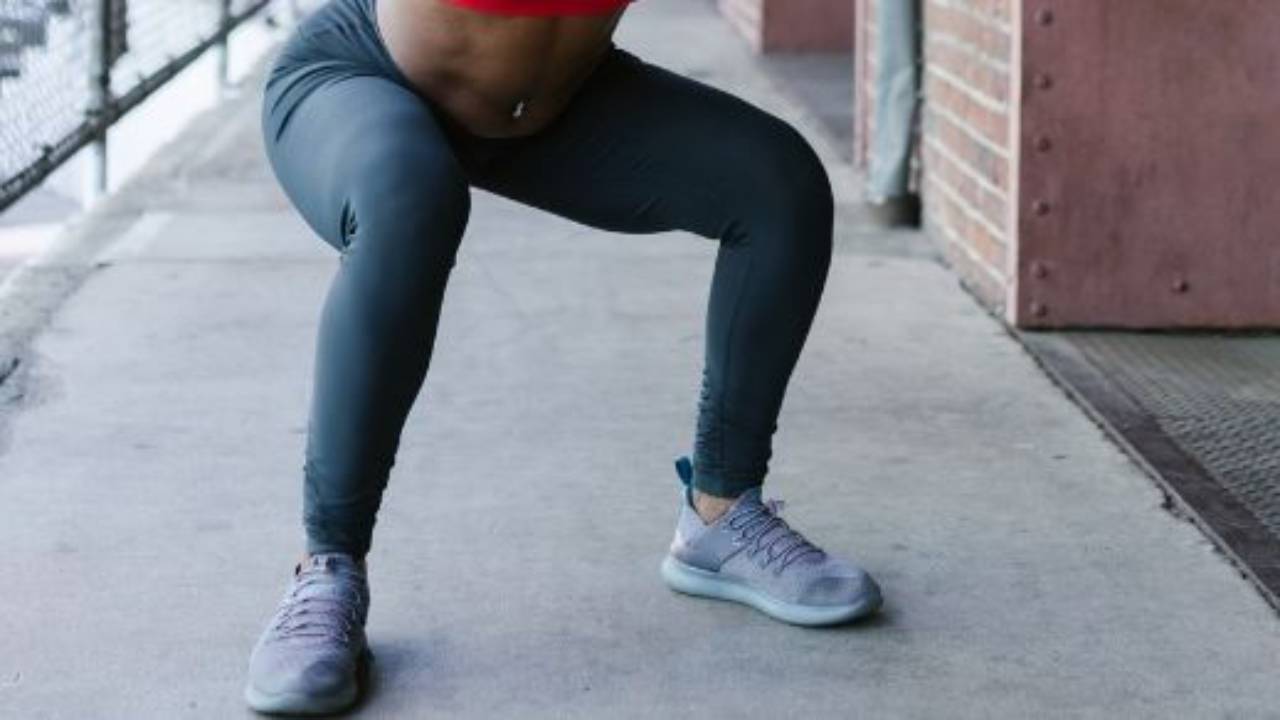
During the Overhead Squat Assessment, the client begins with their feet approximately shoulder-width apart and their toes pointing forward.
As they descend into the squat, watch the position of the feet.
Do the toes stay facing forward?
Or do they rotate outward?
If the feet externally rotate during the squat, you've identified one of the most common movement compensations evaluated in the NASM corrective exercise model.
Recognizing the compensation is the first step.
Understanding why it occurs is what separates memorization from true understanding.
Why the Body Compensates Instead of Stopping
Here's the concept that makes this compensation easy to remember.
As you lower into a squat, your calf muscles aren't doing the work of lifting you. Instead, they must lengthen to allow your ankles to move through the range of motion needed to descend properly.
If those muscles are flexible enough, the squat continues normally.
But what happens if they aren't?
Your body has two options:
- Stop the movement.
- Find another way to complete it...
Almost every time, the body chooses the second option.
It doesn't recognize that your movement is technically "incorrect." Its priority is accomplishing the task. If your goal is to squat down, your nervous system will search for the path of least resistance.
That's why movement compensations occur.
As we explain in the video, the body essentially "finds a way to cheat" so it can continue descending into the squat.
This single idea is one of the most important concepts in corrective exercise.
Movement compensations aren't random mistakes.
They're predictable outcomes of musculoskeletal limitations.
Why Turning the Feet Out Makes Squatting Easier
This is the part many students never forget once they feel it for themselves.
Imagine performing a squat while keeping your feet pointed straight ahead.
Now repeat the movement, but carefully allow your feet to rotate outward as you descend.
For many people, the second squat immediately feels easier.
Why?
Because rotating the feet outward reduces the amount of ankle dorsiflexion required during the squat. In other words, the calf muscles don't have to lengthen as much, allowing the body to reach the same depth with less demand on the calves.
The compensation isn't intentional.
The body simply discovers a more efficient path around the restriction.
A Better Way to Study This for the NASM CPT Exam
Many students memorize this compensation like this:
Feet turn out = tight calves.
That works...
Until exam day.
A stronger approach is to remember the story instead.
- The calves need to lengthen during the descent.
- Tight calves restrict ankle motion.
- The body still wants to squat.
- Turning the feet outward reduces the demand on the calves.
- The compensation appears naturally.
Now you aren't memorizing a table.
You're understanding a movement.
And once you understand the movement, remembering the muscle imbalance becomes much easier.
Trainer Tip
Don't ask clients to intentionally perform movement compensations so they can "feel" them. The risk of injury is just too high.
If a client naturally demonstrates feet turning out during the Overhead Squat Assessment, you already have the information you need. You can then show them the difference between the compensated movement and an improved pattern without asking them to exaggerate poor mechanics. This approach is both safer and more representative of how they actually move.
What's Next?
Now that you understand why feet turn out during the Overhead Squat Assessment, the next step is identifying the muscles responsible for the compensation.
In Part 2, we'll simplify the overactive and underactive muscle patterns so you can stop memorizing long tables and start recognizing predictable movement relationships.
Next Article: Feet Turn Out: Overactive and Underactive Muscles Explained
Previous Article, in case you missed the Overhead Squat Assessment walkthrough
Download Your Free Study Resources
📄 Download the FREE Muscle Compensation Chart to reinforce every movement compensation covered in this series.
🎥 Watch the Complete Muscle Imbalance Playlist for video demonstrations of each compensation.
📝 Continue to Feet Turn Out – Part 2 to learn how this leads to overactive and underactive muscles (and how to easily memorize them)!
🧪 Take the FREE NASM Practice Test to assess your understanding of corrective exercise and movement assessments.
🎓 Need More Help Preparing for the NASM CPT Exam? Explore the complete CPT Academy Prep Course for in-depth video instruction, quizzes, and guided study resources.
Don't miss a beat!
New moves, motivation, and classes delivered to your inbox.
We hate SPAM. We will never sell your information, for any reason.
Author