
Why the Knees Cave In During the Overhead Squat Assessment (And What It Means)
Sep 05, 2026If you've ever watched someone perform an overhead squat, you may have noticed their knees move inward as they descend.
NASM refers to this as knees cave in, one of the most common movement compensations observed during the Overhead Squat Assessment.
For many students preparing for the NASM CPT exam, the first instinct is to ask:
"Which muscles are overactive?"
While that's an important question, it's not the best place to start.
Instead, begin with a different question:
Why would the body allow the knees to move inward in the first place?
Once you understand the answer, remembering the muscle imbalances becomes much easier.
Watch the Video First
This article expands on the concepts taught in the accompanying video. Watching the movement in real time makes it much easier to recognize the compensation during both the NASM CPT exam and when assessing clients.
▶︎ Watch: Why Do Knees Cave in During a Squat?
Download the Free Muscle Compensation Chart
As you work through this series, keep the CPT Academy Muscle Compensation Chart nearby. It summarizes the primary overactive and underactive muscles for every major movement compensation and serves as a quick study reference.
⬇︎ Download the Free Muscle Compensation Chart
What Does "Knees Cave In" Mean?
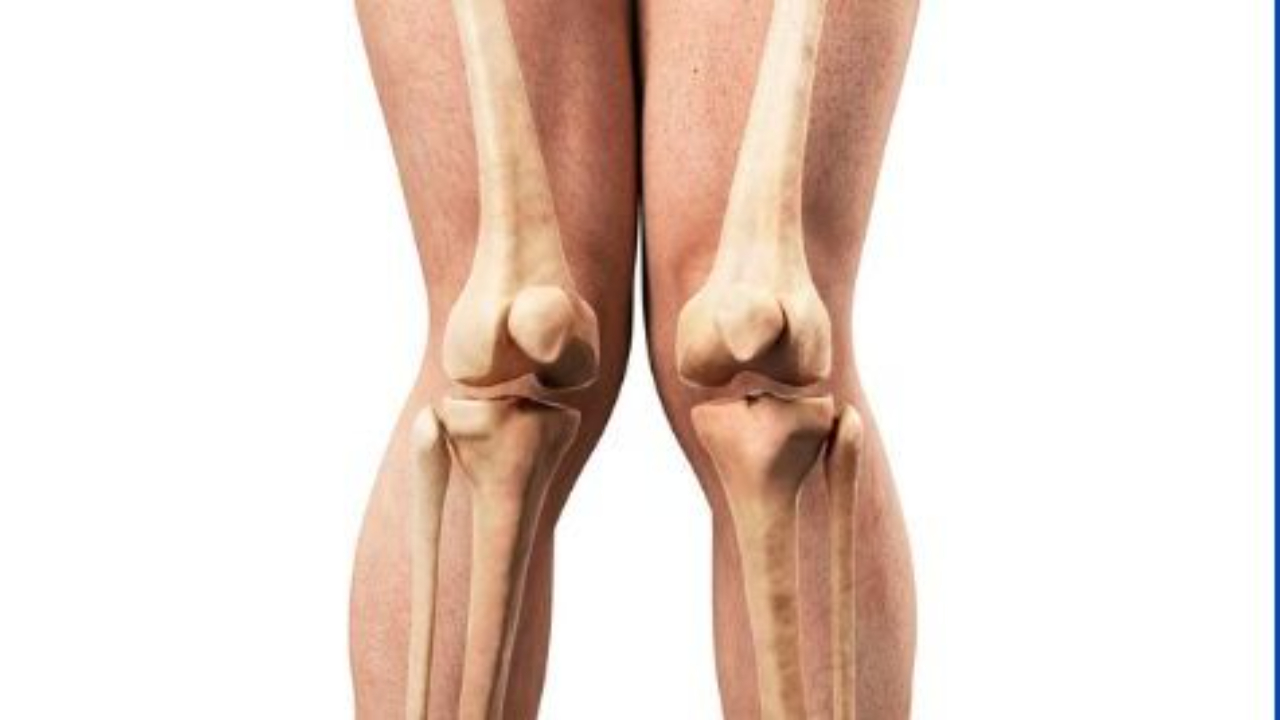
During an ideal squat, the knees should generally track in line with the 2nd and 3rd toes throughout the movement.
When the knees drift toward one another as the body lowers, the movement is commonly called knee valgus or knees caving inward.
This isn't simply a random mistake.
It's a movement strategy.
The body has decided that moving the knees inward is the easiest way to accomplish the task.
That raises an important question:
Why would it choose that strategy?
The Body Always Wants to Complete the Movement
One of the biggest misconceptions about movement assessments is that the body will simply stop if something isn't functioning optimally.
It won't.
If your brain has one objective—lower yourself into a squat—it will usually find a way to accomplish that goal.
Even if the movement isn't ideal...and can lead to injury.
Your nervous system isn't trying to create perfect technique.
It's trying to complete the movement as efficiently as possible.
When one area of the body can't contribute as it should, another area often compensates.
This concept is one of the foundations of corrective exercise.
Compensation Is the Body's Backup Plan
Imagine driving toward a road that's closed for construction.
You probably won't stop the car and turn around.
Instead, you'll follow a detour.
The detour isn't the shortest or most efficient route.
It's simply the route that still gets you to your destination.
Movement compensations work the same way.
The body finds an alternate pathway that allows the movement to continue.
During the Overhead Squat Assessment, knees caving inward is often one of those detours.
Rather than maintaining ideal alignment, the body shifts into a position that requires less control from certain muscles and greater contribution from others.
One Compensation Doesn't Tell the Whole Story
Another common mistake is assuming that one movement compensation tells you everything you need to know.
It doesn't.
The Overhead Squat Assessment is designed to identify movement patterns—not diagnose injuries or pinpoint a single muscle that's causing the problem. You will get very good at identifying underlying causes, but that takes time and practice and is not a focal point of the CPT exam.
For example, two clients may both demonstrate knees caving inward while arriving there for different reasons.
That's why trainers evaluate the entire kinetic chain instead of focusing on one joint in isolation.
The knees are responding to what's happening both above and below them.
The feet, ankles, hips, and trunk all influence how the knees move during a squat.
Think About the Entire Kinetic Chain
One of the biggest concepts you'll encounter throughout NASM is the kinetic chain.
Your body doesn't function as a collection of isolated muscles.
Every joint influences the joints around it.
If movement changes at the foot...
...the knee must adapt.
If movement changes at the hip...
...the knee adapts again.
By the time you notice the knees moving inward, you're seeing the result of multiple joints working together.
That's why corrective exercise focuses on movement patterns rather than individual muscles.
Don't Memorize the Muscle Table Yet
At this point, many students want to skip ahead and memorize the list of overactive and underactive muscles.
Resist that temptation.
If you memorize the table before understanding the movement, every compensation pattern eventually starts to blend together.
Instead, remember one simple idea:
The knees are not "failing." They're compensating.
Once you understand why the body chose that movement, the muscle imbalances become much more logical.
That's exactly what we'll cover in the next article.
NASM Exam Tip
If a practice question describes the knees moving inward during the Overhead Squat Assessment, don't immediately start thinking about muscle names.
First identify the movement compensation.
Then ask yourself:
"Why would the body choose this movement?"
That reasoning process is often more valuable than memorizing a chart.
Practical Trainer Tip
When you're assessing a client, don't stop observing after you notice the knees caving inward.
Continue watching the rest of the body.
Ask yourself:
- What are the feet doing?
- Are the heels lifting?
- Is the client leaning excessively forward?
- Is the low back arching?
- Etc.
Movement compensations frequently occur together.
The more complete your observation, the better you'll understand the client's issues.
Common Mistake
Many new trainers immediately begin stretching or strengthening muscles as soon as they notice the knees moving inward.
Instead, use the compensation as information.
The assessment comes first.
The corrective exercise program comes afterward.
Good programming begins with good observation.
Study Strategy
When reviewing Overhead Squat compensations, don't cover the picture and try to recite muscle names.
Instead, look at the movement and answer three questions:
- What compensation am I seeing?
- Why would the body choose this movement?
- How should the body be moving in this situation?
Once those answers become automatic, learning the muscle imbalances becomes much easier.
Key Takeaways
- Knees caving inward is a movement compensation, not simply a "bad squat."
- The body will usually compensate rather than stop moving.
- The Overhead Squat Assessment identifies faulty movement patterns throughout the entire kinetic chain.
- Understanding why the compensation occurs is more valuable than memorizing a muscle chart.
- Once the compensation itself makes sense, the muscle imbalances become much easier to remember.
Continue the Series
Now that you understand why the knees cave inward, it's time to identify which muscles are responsible.
In Part 2, we'll break down the overactive and underactive muscles associated with this compensation and show you a simple way to remember them without relying on rote memorization.
Previous Articles, in case you missed them:
- Overhead Squat Assessment walkthrough
- Feet Turn Out series
Download Your Free Study Resources
📄 Download the FREE Muscle Compensation Chart to reinforce every movement compensation covered in this series.
🎥 Watch the Complete Muscle Imbalance Playlist for video demonstrations of each compensation.
📝 Continue to Knees Cave in – Part 2 to learn how this leads to overactive and underactive muscles (and how to easily memorize them)!
🧪 Take the FREE NASM Practice Test to assess your understanding of corrective exercise and movement assessments.
🎓 Need More Help Preparing for the NASM CPT Exam? Explore the complete CPT Academy Prep Course for in-depth video instruction, quizzes, and guided study resources.
Don't miss a beat!
New moves, motivation, and classes delivered to your inbox.
We hate SPAM. We will never sell your information, for any reason.
Author