
Feet Turn Out: The Overactive and Underactive Muscles You Actually Need to Know
Aug 14, 2026Feet Turn Out: The Overactive and Underactive Muscles You Actually Need to Know
If you've already learned why the feet turn out during the Overhead Squat Assessment, you're ready for the next step:
Which muscles are causing it?
This is where many NASM CPT students get overwhelmed.
The textbook presents long tables of muscles to memorize, and before long every compensation pattern starts blending together.
Fortunately, there is a much easier approach.
Instead of trying to memorize every muscle independently, start with the movement compensation first.
Once you know why the feet turn out, the muscle imbalance becomes much more logical.
Missed Part 1?
If you haven't already, start with:
Why Your Feet Turn Out During the Overhead Squat Assessment
Understanding the mechanics behind the compensation makes everything in this article much easier to remember.
Watch the Video First
This article expands on the concepts taught in the accompanying video. Watching the movement in real time makes it much easier to recognize the compensation during both the NASM CPT exam and when assessing clients.
▶︎ Watch: Feet Turn Out During the Overhead Squat Assessment
Download the Free Muscle Compensation Chart
As you work through this series, keep the CPT Academy Muscle Compensation Chart nearby. It summarizes the primary overactive and underactive muscles for every major movement compensation and serves as a quick study reference.
⬇︎ Download the Free Muscle Compensation Chart
Step 1: Start With the Compensation
One of the biggest mistakes students make is trying to memorize all of the overactive muscles together and then all of the underactive muscles together.
That isn't how you'll recognize the answers during the exam.
Instead, begin with the movement itself.
Ask yourself:
What compensation am I seeing?
In this case, the answer is:
Feet turn out.
Now your brain has a starting point.
Everything else builds from there.
This is much easier than trying to remember dozens of isolated muscle names.
Which Muscles Become Overactive?
The primary muscles associated with feet turning out are the calf muscles.
NASM doesn't simply say "calves."
Instead, you'll see the individual muscle names:
- Gastrocnemius
- Soleus
Together, these make up the calf complex.
So whenever you see gastrocnemius or soleus on the exam, immediately think:
Calves.
These muscles have become shortened and overactive, limiting ankle dorsiflexion during the squat. Rather than stopping the movement, the body externally rotates the feet to reduce the amount of calf flexibility required.
You'll also notice that NASM includes the hamstrings as overactive.
This is important to know for the exam, but from a learning perspective it is secondary.
If you understand that tight calves are the primary driver of this compensation, you'll answer most feet turn out questions correctly.
NASM Exam Tip
When you see:
- Gastrocnemius
- Soleus
Don't stop to decode the Latin terminology.
Translate it immediately to:
Calves = Tight
That shortcut makes many corrective exercise questions much easier.
Don't Memorize Muscles. Think Opposites.
Now comes the part students often find confusing.
If the calves are too tight...
...what should happen to the muscles on the opposite side of the lower leg?
Think back to one of the most important concepts in corrective exercise:
When one muscle group becomes chronically shortened and overactive, the opposing muscles often become lengthened and underactive.
If the muscles on the back of the lower leg become tight...
...the muscles on the front of the lower leg are forced to lengthen/stretch out...and get stuck there.
Once you understand reciprocal inhibition, you don't have to memorize another table—you simply ask yourself:
What's on the opposite side?
That's exactly the approach you teach in the video series.
Which Muscles Become Underactive?
The primary underactive muscles are:
- Anterior tibialis
- Posterior tibialis
Collectively, these are often referred to as the shin muscles.
These muscles help control the position of the foot and ankle.
As the calf muscles become increasingly dominant, the tibialis muscles lose their ability to fire and contract.
Instead of memorizing their names independently, connect them directly to the overactive calves.
Think of it like this:
Back of lower leg
↓
Calves
↓
Too tight
↓
Front of lower leg
↓
Tibialis muscles
↓
Too weak
That entire chain follows naturally from reciprocal inhibition.
Don't Forget the Glutes
One additional group appears in NASM's underactive muscle table:
The gluteus medius and gluteus maximus.
At first, students often wonder why muscles at the hip are included in a foot compensation.
The answer is simple:
Movement is never isolated to a single joint.
The body functions as a kinetic chain.
When one link in the chain compensates, the effects travel upward. Weak gluteal muscles reduce the body's ability to control lower-extremity alignment, contributing to the altered movement pattern seen during the squat.
You don't need to overcomplicate it.
Remember the simplified rule you've been using throughout this series:
Calves tight. Glutes weak.
That single phrase will carry you through a surprising number of NASM questions.
The Simplest Way to Remember Feet Turn Out
Forget the chart for a moment.
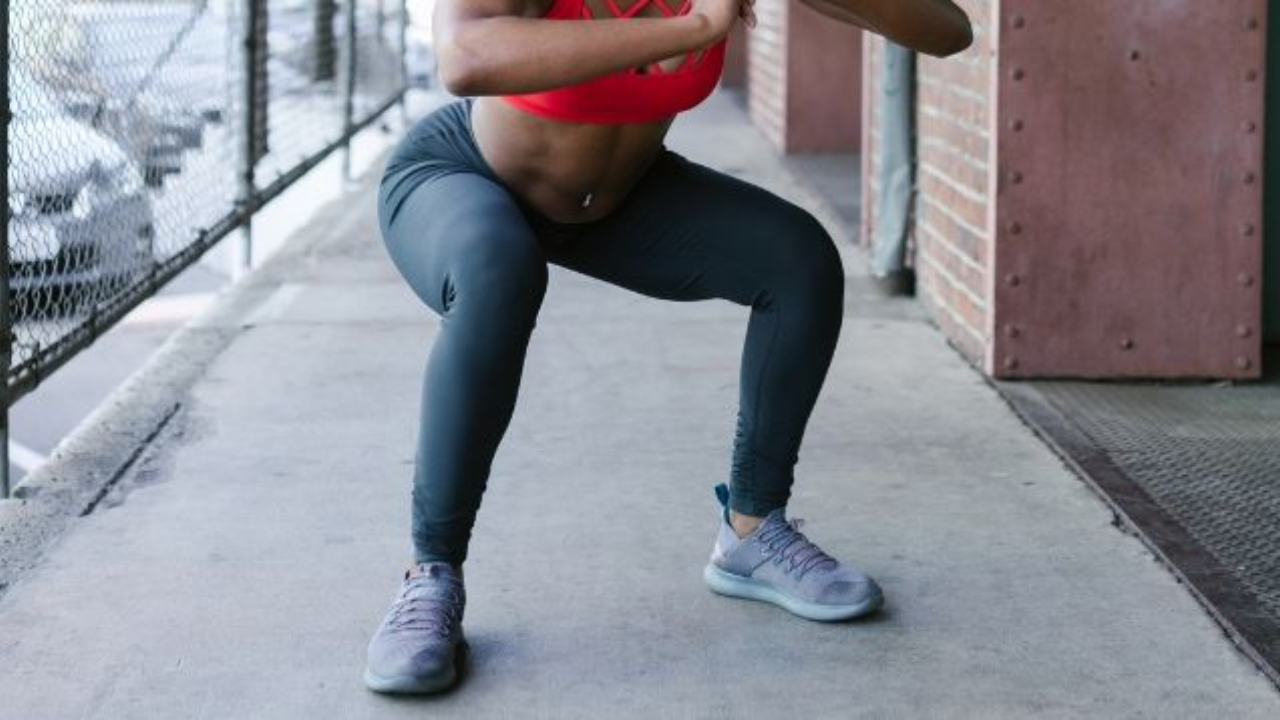
Picture someone squatting.
Their feet rotate outward.
Now ask yourself three questions.
Why did that happen?
Because the calves are tight.
What muscles are opposite the calves?
The tibialis muscles.
What other muscles work reciprocally with the calves?
The glutes.
That's it!
Instead of memorizing seven muscle names, you've built a logical sequence that you can recreate during the exam—even if you momentarily forget one of the terms.
Common Mistake
Many students memorize:
- Gastrocnemius
- Soleus
- Hamstrings
- Tibialis anterior
- Tibialis posterior
- Gluteus medius
- Gluteus maximus
...without understanding how they're related.
The result?
A week later, every compensation pattern starts to look the same.
Instead, always connect each muscle to the movement compensation first.
The movement becomes the anchor.
The muscles become much easier to recall.
Study Strategy
When reviewing corrective exercise tables, cover the muscle names.
Look only at the movement compensation.
Try to predict:
- Which muscles are probably tight?
- Which muscles should be weak?
Only then uncover the answers.
You'll train yourself to reason through the compensation instead of relying on memorization.
Key Takeaways
- Start with the movement—not the muscles.
- Feet turn out is primarily associated with tight calves.
- NASM lists the gastrocnemius and soleus individually.
- Reciprocal inhibition helps explain why the tibialis muscles and gluteals become underactive.
- Weak glutes also contribute to the compensation because movement occurs through the entire kinetic chain.
- Understanding the relationship between these muscles is far more effective than memorizing isolated tables.
Up Next
Now that you understand why the compensation happens and which muscles are involved, it's time to put everything together.
In Part 3, you'll learn how NASM tests this compensation, common exam traps, practical coaching cues, and simple strategies for answering feet turn out questions with confidence.
Next Article: How to Master Feet Turn Out Questions on the NASM CPT Exam
Download Your Free Study Resources
📄 Download the FREE Muscle Compensation Chart to reinforce every movement compensation covered in this series.
🎥 Watch the Complete Muscle Imbalance Playlist for video demonstrations of each compensation.
📝 Continue to Feet Turn Out – Part 3 to learn how this leads to overactive and underactive muscles (and how to easily memorize them)!
🧪 Take the FREE NASM Practice Test to assess your understanding of corrective exercise and movement assessments.
🎓 Need More Help Preparing for the NASM CPT Exam? Explore the complete CPT Academy Prep Course for in-depth video instruction, quizzes, and guided study resources.
Don't miss a beat!
New moves, motivation, and classes delivered to your inbox.
We hate SPAM. We will never sell your information, for any reason.
Author