
Anatomical Position Explained: The Foundation of Biomechanics (NASM CPT Guide)
Apr 26, 2026If you’re studying for the National Academy of Sports Medicine CPT exam, one of the simplest—but most important—concepts to understand is anatomical position.
It might seem basic at first, but this concept is the starting point for everything in biomechanics, including:
- Planes of motion
- Movement terminology
- Overactive and underactive muscles
If you don’t fully understand anatomical position, a lot of other topics won’t fully click.
What Is Anatomical Position?
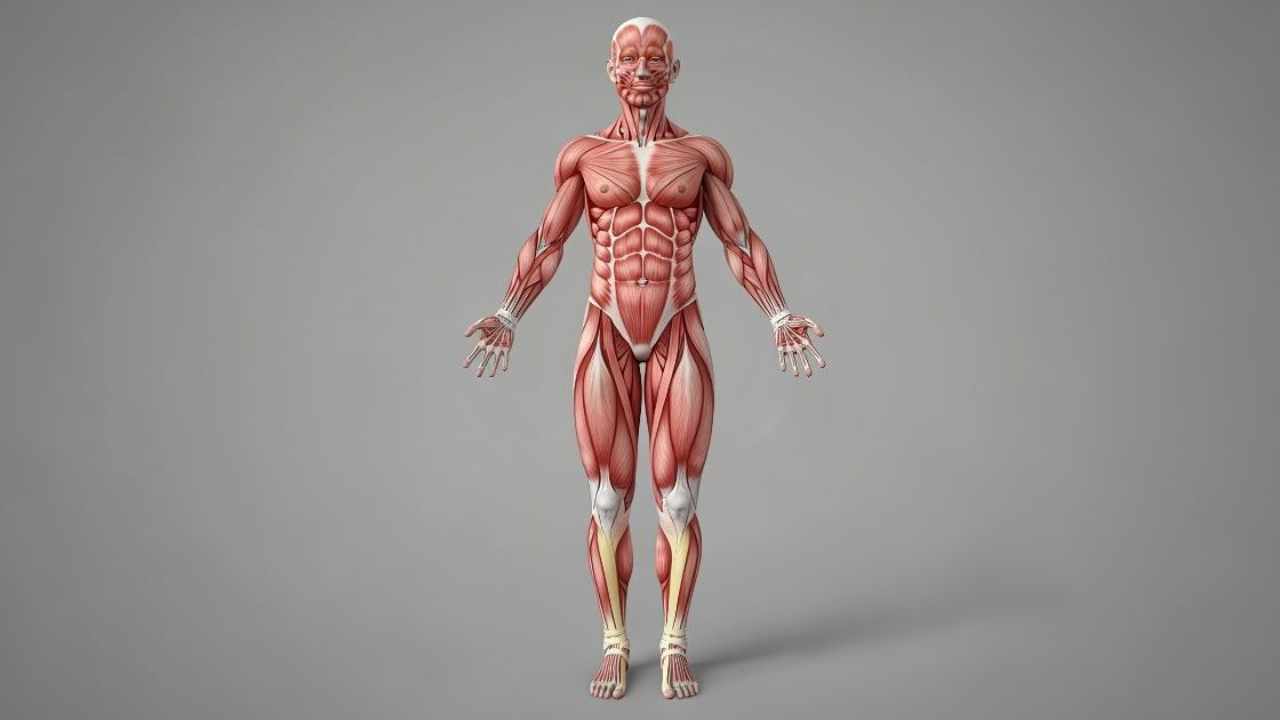
Anatomical position is the standardized reference position used to describe the human body and all movements.
In anatomical position, the body is:
- Standing upright
- Feet shoulder-width apart
- Toes pointing forward
- Arms at the sides
- Palms facing forward
This position is the baseline for describing all movement in biomechanics.
Why Anatomical Position Matters
Every movement you study (and every question on the exam) is described as a change from anatomical position.
That means:
- Flexion, extension, rotation—all start from here
- Planes of motion are based on this position
- Muscle actions are referenced from this position
Without this reference point, there would be no consistent way to describe movement.
👉 Understanding Planes of Motion
How It Connects to Planes of Motion
When you learned about planes of motion (sagittal, frontal, transverse), those planes are all based on the body starting in anatomical position.
For example:
- A bicep curl is sagittal because of how it moves from anatomical position
- A lateral raise is frontal relative to anatomical position
If the starting position changed, the classification of movement could also change.
Why This Matters for Muscle Imbalances
Anatomical position also helps us understand alignment and posture, which directly relates to overactive and underactive muscles.
When the body is in ideal alignment:
- Muscles are balanced
- Joints are positioned correctly
- Movement is efficient
When the body deviates from that position:
- Some muscles become overactive (tight)
- Others become underactive (weak)
- Compensation patterns develop
👉 Complete Guide to Overactive/Underactive Muscles
👉 Overactive/Underactive Muscles Made Easy Mini-Course
How Anatomical Position Shows Up on the NASM CPT Exam
You likely won’t get a direct question like “What is anatomical position?”
But you will see it applied in questions about:
- Movement terminology
- Planes of motion
- Joint actions
- Postural assessments
Key Tip:
Always visualize the body starting in anatomical position before answering.
Common Mistakes Students Make
1. Ignoring the Starting Position
Students often think about movement without considering where it starts.
2. Memorizing Without Understanding
Anatomical position isn’t just a definition—it’s a reference system.
3. Not Connecting It to Other Topics
This concept ties directly into:
- Biomechanics
- Corrective exercise
- Program design
How to Study This Effectively
- Picture anatomical position before every movement question
- Practice identifying movements from that starting point
- Connect it to real exercises you already know
👉Want more free NASM CPT study help?
👉Test your knowledge with a Free Practice Test.
👉Check out our full CPT Test Prep Course!
Final Thoughts
Anatomical position may seem like a small concept—but it’s actually the foundation of everything in biomechanics.
If you take the time to truly understand it now, you’ll:
- Learn faster
- Reduce confusion on the exam
- Build a stronger foundation as a trainer
Don't miss a beat!
New moves, motivation, and classes delivered to your inbox.
We hate SPAM. We will never sell your information, for any reason.
Author